Under the Microscope: How Employer Verification Has Evolved—and What It Means for Your Professional Documentation
The Verification Landscape Has Fundamentally Shifted
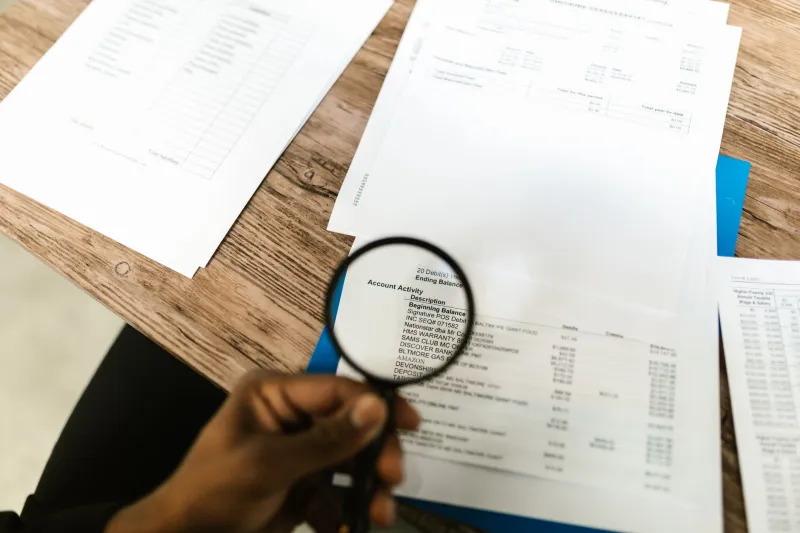
Not long ago, a hiring manager might glance at a resume, confirm a degree was listed, and move forward. That era is largely over. Today, a growing number of US employers—particularly those in healthcare, financial services, education, and government contracting—have integrated third-party verification services directly into their applicant tracking systems. Firms such as HireRight, Sterling, and Checkr now conduct credential checks as a routine step, not an exception reserved for executive hires.
What's driving this shift? Two forces are converging simultaneously. First, credential fraud has become measurably more sophisticated. Digital document editing tools are widely accessible, and the volume of fabricated or embellished credentials submitted to employers has increased sharply over the past several years. Second, regulatory bodies—including those overseeing licensed professions in medicine, law, finance, and engineering—have tightened their expectations around employer due diligence. Organizations that fail to verify credentials before placing individuals in sensitive roles now face real legal and reputational exposure.
The result is a verification environment that is both more thorough and less forgiving of inconsistencies, even innocent ones.
What Actually Triggers a Deeper Investigation
Most credential checks begin with a standardized sweep: confirming degree titles, graduation dates, and issuing institutions through the National Student Clearinghouse or direct contact with registrars. But certain patterns consistently escalate a routine check into a more intensive review.
Discrepancies between resume dates and institutional records are among the most common triggers. A candidate who lists a degree completion year that differs from what the institution has on file—even by a single year—will almost always prompt follow-up questions. This can happen innocently when professionals conflate the year they finished coursework with the year a degree was formally conferred, but the inconsistency still raises flags.
Gaps in employment or education timelines that are not clearly explained also attract scrutiny. Verifiers are trained to look for periods that are unaccounted for, particularly when credentials seem to cluster in ways that don't align with a plausible academic or professional timeline.
Credentials from institutions that no longer operate or lack regional accreditation are another red flag. With the closure of several for-profit university chains in recent years, many legitimate graduates now find their credentials require additional documentation to verify. Verifiers unfamiliar with an institution's history may initially treat it as suspect until further confirmation is obtained.
Certifications without traceable issuing bodies round out the most frequent triggers. Professional certifications that cannot be cross-referenced against a recognized credentialing organization's public registry—or that have lapsed without notation—will draw additional attention.
Building Your Personal Pre-Audit Framework
The most effective strategy any professional can adopt is to conduct a self-audit before documentation ever reaches a hiring manager's desk. This is not about manufacturing a favorable impression; it is about ensuring that the record you present is accurate, complete, and verifiable through the same channels a third-party firm would use.
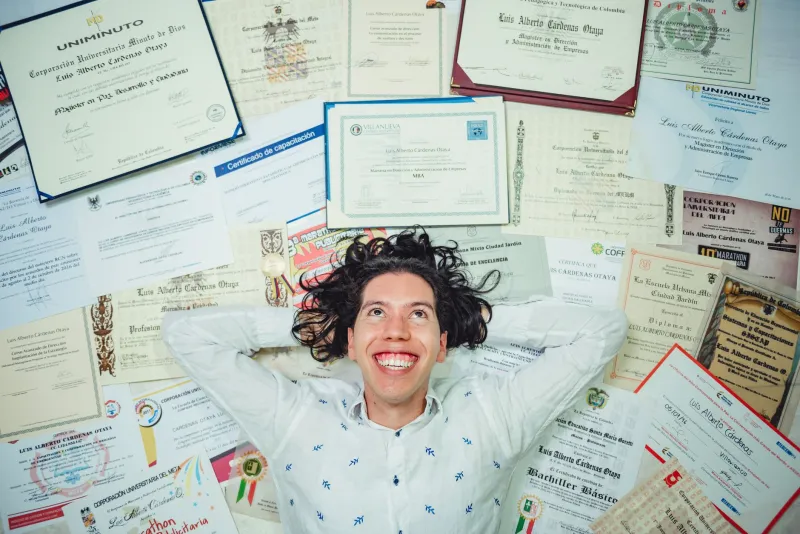
Step one: Gather every credential in your portfolio. This includes degrees, diplomas, transcripts, professional licenses, certifications, and any continuing education records. Physical and digital copies should both be accounted for.
Step two: Cross-reference dates and titles against official sources. Contact your alma mater's registrar and confirm that the degree title, major, and conferral date on your records match exactly what you list on your resume. Even minor formatting differences—"Bachelor of Science in Business Administration" versus "B.S. Business"—can create confusion during verification.
Step three: Verify that your certifications are current and searchable. Most recognized credentialing bodies maintain public lookup tools. Search for yourself the same way a verifier would. If your name does not appear, or if your certification status shows as lapsed, address that before applying.
Step four: Identify and document any legitimate gaps. If you took time away from work or education for personal, medical, or family reasons, prepare a clear and consistent explanation. You are not obligated to disclose sensitive details, but having a coherent narrative ready prevents a gap from becoming a source of suspicion.
Step five: Secure supplemental documentation for any credential that may be difficult to verify. If your degree came from an institution that has since closed or merged, contact the state agency or accrediting body that absorbed its records. Obtain official letters or transcripts from that authority and keep them on hand.
The Role of Documentation Authenticity in a Competitive Market
In a labor market where hundreds of qualified candidates may apply for a single position, the integrity of your documentation is not a secondary concern—it is a primary competitive factor. A credential that cannot be verified quickly and cleanly can cause a hiring process to stall, and in many cases, employers will simply move on to the next candidate rather than invest time in resolving ambiguities.
Authenticity in this context means more than the absence of fabrication. It means that every element of your professional record is consistent, traceable, and presented in a format that aligns with what verifiers expect to find. A legitimate credential that is poorly documented can functionally behave like a problematic one during a background check.
Professionals who take the time to organize and verify their own records before entering a hiring process gain a material advantage. They move through background checks faster, they project confidence when credential questions arise in interviews, and they avoid the last-minute scramble of locating documents under deadline pressure.
Staying Ahead of an Evolving Standard
Verification practices will continue to grow more rigorous. Blockchain-based credential registries are already being piloted by several universities and credentialing bodies, and it is reasonable to expect that digitally authenticated, instantly verifiable credentials will become the norm within the next decade. Professionals who maintain organized, current, and fully authenticated credential portfolios now will be best positioned to adapt as those standards evolve.
At CredentialHub, our editorial mission centers on helping professionals understand the documentation landscape clearly and navigate it with confidence. Whether you are entering the job market for the first time, executing a mid-career transition, or preparing for a senior-level search, the quality and verifiability of your credentials is a strategic asset—one that deserves the same attention you give to your resume or interview preparation.
Take the time to audit what you have. Resolve what is unclear. And enter every hiring process knowing that your documentation will hold up under scrutiny.