From File Folders to Blockchain: How the Credential Verification Landscape Is Leaving PDF Portfolios Behind
For decades, professional credentialing followed a predictable ritual. You completed a program, received a certificate—paper or PDF—and stored it somewhere between a manila folder and a cloud drive you occasionally forgot the password to. When an employer asked for proof, you attached the file to an email and hoped the document looked legitimate enough to pass muster.
That ritual is ending.
Across industries from healthcare and finance to technology and education, employers are moving toward verification systems that demand more than a static file. The question for today's professionals is not whether this transition will affect them—it already is—but whether they understand it well enough to stay ahead of it.
Why PDFs Were Always a Fragile Foundation
A PDF certificate carries an inherent credibility problem: it proves nothing on its own. Any competent designer can replicate the visual appearance of a credential from virtually any institution. Employers and HR departments have long understood this, which is why background verification firms have built entire service lines around manually confirming what a document claims.
The friction in that process is enormous. Verification requests get lost. Institutions have varying response times. International credentials introduce additional complexity. For a hiring manager trying to fill a role quickly, a credential that cannot be instantly confirmed is a liability, not an asset.
This is the structural vulnerability that new verification technologies are designed to eliminate.
What Blockchain-Verified Credentials Actually Do
The term "blockchain credential" gets used loosely, but the underlying mechanism is worth understanding clearly. When a credential is issued on a blockchain-based platform, a cryptographic record of that issuance is written to a distributed ledger—a permanent, tamper-evident log that any authorized party can query in seconds.
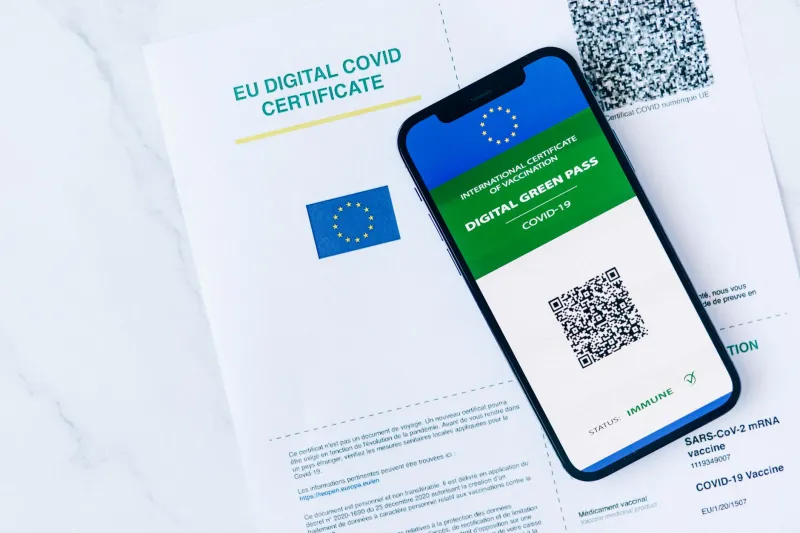
Instead of sending a PDF, a credentialed professional shares a unique verification link or a digital badge. The employer clicks through, the system queries the ledger, and the credential's authenticity—issuing institution, date, scope, and current validity status—is confirmed without any human intermediary.
Platforms like Credly, Accredible, and Badgr have been building this infrastructure for years, and their adoption by major credentialing bodies has accelerated considerably. The American Nurses Credentialing Center, numerous Project Management Institute certifications, and a growing number of university continuing education programs now issue credentials in formats compatible with these systems.
The Employer Adoption Curve Is Steeper Than It Appears
It would be easy to dismiss this shift as a niche trend confined to the tech sector. That assessment underestimates how quickly enterprise HR infrastructure is changing.
Large US employers—including several Fortune 500 companies in manufacturing, logistics, and financial services—have begun integrating digital credential verification directly into their applicant tracking systems. Rather than manually reviewing attachments, recruiters can receive an auto-verified credential summary alongside a résumé. Credentials that cannot be verified through these pipelines may not be reviewed at all, not because of skepticism about the candidate, but simply because the workflow no longer accommodates manual document review.
For professionals applying to mid-to-large organizations, this is not a future concern. It is a present reality in many hiring contexts.
Auditing Your Current Credential Portfolio for Portability
Understanding the landscape is only useful if it leads to action. The practical starting point is a straightforward audit of your existing credentials through the lens of digital portability.
Step one involves identifying every credential you hold that could plausibly appear on a job application or professional profile. This includes degrees, certifications, licenses, continuing education completions, and any professional development documentation.
Step two requires checking whether the issuing body offers a digital badge or blockchain-verified version of each credential. Many institutions that issued paper or PDF certificates in prior years have since built digital issuance capabilities. Contacting the issuer directly—or checking platforms like Credly for affiliated organizations—can reveal options you may not have known existed.
Step three involves updating your professional presence. LinkedIn's credential section supports digital badge integration, and many employers now review LinkedIn profiles as part of their initial screening. A credential listed without a verifiable badge link is noticeably weaker than one accompanied by an active verification URL.
The Ongoing Role of Traditional Documentation
It would be misleading to suggest that paper and PDF credentials have become worthless overnight. Many licensing boards, particularly in regulated professions such as law, medicine, and engineering, continue to operate within traditional documentation frameworks. State licensing agencies often require notarized copies or official transcripts sent directly between institutions.
The more accurate picture is one of parallel systems operating simultaneously, with the balance of power shifting steadily toward digital verification. Professionals who maintain both formats—keeping traditional documentation current while actively building a digitally verifiable credential profile—are best positioned to navigate this transitional period without disruption.
The risk lies in assuming the old system will remain sufficient indefinitely. That assumption has already cost some professionals opportunities they were otherwise qualified for.
Building a Future-Resistant Credential Strategy
The professionals who will weather this transition most effectively are those who treat credential management as an ongoing strategic function rather than a one-time administrative task.
This means prioritizing credentials from issuers that have already adopted digital verification infrastructure. It means regularly revisiting your credential portfolio to identify gaps between what you hold and what the market now expects. And it means understanding that the format in which you present your qualifications has become nearly as important as the qualifications themselves.
At CredentialHub, we work with professionals navigating exactly these decisions—helping them understand not just what credentials to pursue, but how to ensure those credentials are documented, formatted, and presented in ways that meet the evolving standards of the industries they are targeting.
The filing cabinet served its purpose. The professionals who recognize that its time has passed—and act accordingly—will find themselves with a meaningful advantage as the verification landscape continues to shift beneath everyone else's feet.