Earned on the Floor, Not in the Lecture Hall: Why Apprenticeship Credentials Now Compete With Degrees
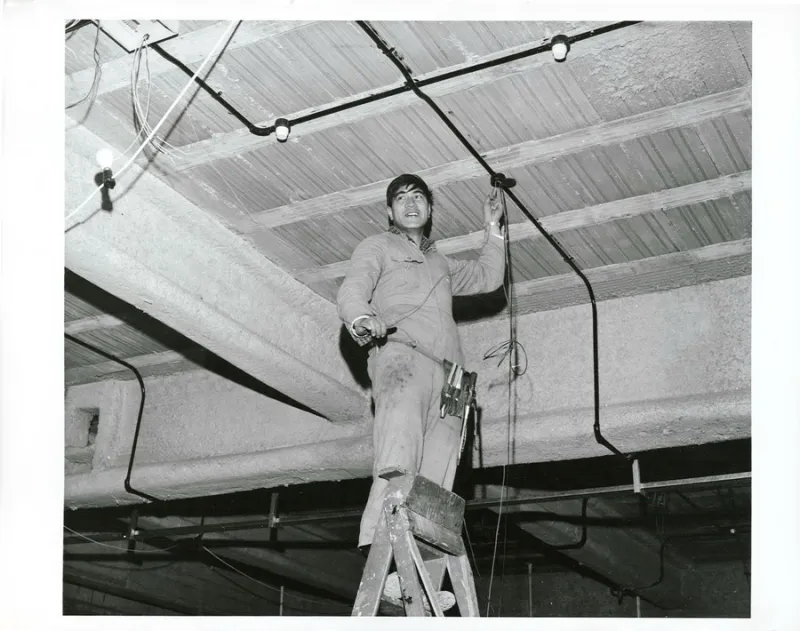
Photo: Mr. Riethmaier, CC BY 2.0, via Wikimedia Commons
For most of the twentieth century, the American apprenticeship was a building-trades institution: a formal indenture, a journeyman's card, and a career that ran through a union hall. That description no longer holds. Registered apprenticeships now appear in insurance underwriting, cybersecurity operations, semiconductor fabrication, and primary care support — and the credential they produce is being read by employers with increasing seriousness.
The shift matters for anyone weighing an expensive degree against a slower but paid route into a skilled occupation. It also matters for the professionals already in those roles, many of whom have never learned to document what they can do in a form a hiring committee can evaluate.
A Legal Structure Older Than Most Universities' Accreditation Rules
The national apprenticeship system traces to the National Apprenticeship Act, enacted in 1937 and still the statutory foundation for federal registration. Programs registered under that framework — or under a recognized State Apprenticeship Agency — carry a defined work process schedule, a required minimum of related technical instruction, progressive wage increases, and a formal certificate of completion issued at the end.
That structure is what distinguishes a registered apprenticeship from an informal traineeship. Registration creates a record. The record has a custodian. And increasingly, the record can be verified by a third party — which is precisely what makes it useful in a hiring process built on primary-source confirmation.
What Employers Actually Read
Recruiters evaluating an apprenticeship completion are looking for three signals, and only one of them is the certificate.
Registered status. A program registered with the federal Office of Apprenticeship or a state agency carries a registration number and a defined occupational code. Unregistered, employer-specific training programs may be excellent, but they lack the external anchor that lets a verification service confirm anything beyond employment dates.
Occupational alignment. Employers compare the program's occupational title against the role being filled. A completed apprenticeship in industrial maintenance technology reads differently for a facilities engineering position than for a general laborer posting, even if the daily work overlapped.
Duration and progression. Registered programs specify required hours, typically between one and five years depending on the occupation, along with the wage progression that accompanies them. A candidate who completed the full term communicates something a certificate from a six-week bootcamp cannot.
Documenting Competencies That Have No Transcript
The practical difficulty with on-the-job learning is that it produces no conventional academic artifact. There is no registrar, no credit hour, no grade point average. The evidence lives in logbooks, supervisor evaluations, and the work itself.
A workable competency file includes:
- The certificate of completion, with the sponsoring employer, registration number, and completion date visible.
- The work process schedule, showing the hours completed in each defined competency area.
- Related technical instruction transcripts from the community college, technical center, or industry provider that delivered the classroom component.
- Supervisor attestations describing scope and independence of work, written in plain language rather than internal job codes.
- A portfolio of representative work products where confidentiality permits, with a short note on what each demonstrates.
Supervisor attestations deserve particular attention. A letter that says the individual is a hard worker adds little. A letter that states the individual independently diagnosed and repaired a specified class of equipment, or managed a defined client portfolio under supervision for a stated period, gives a hiring manager something to weigh against a degree-holder's coursework.
The Credit Bridge
The most underused feature of the apprenticeship system is the pathway back into formal education. Many registered programs have established articulation agreements that convert apprenticeship completion into academic credit, and evaluation services have long assessed workplace learning for college credit recommendations.
For professionals who completed an apprenticeship and later want a two-year or four-year credential, this matters. A completion certificate can function as a transcript substitute in an admissions file, provided it is presented with the work process schedule and the related instruction record rather than on its own.
Where the Pathway Is Gaining Ground
The growth is not confined to the trades. Registered programs in financial services, information technology, and health care support have expanded as employers confront the gap between entrylevel requirements and available talent. Several states have built apprenticeship offices that coordinate with community colleges, and registered apprenticeship has become a standard instrument in workforce development funding.
The common thread across sectors is the same: an occupation with a defined skill set, a shortage of qualified entrants, and a training cost that employers would rather amortize than externalize.
What the Hierarchy Bending Means for Candidates
The resume hierarchy is bending, not breaking. Degrees remain the default filter for many professional roles, and no apprenticeship completion neutralizes a licensing requirement or an accreditation standard.
What has changed is that a verifiable, registered, multiyear credential earned in the workplace now carries independent weight in comparison with a degree of equivalent duration. Candidates who present it as a structured record — certificate, schedule, instruction, attestation — are routinely treated as more legible than candidates who present a list of duties.
The lesson for professionals on either path is the same one that governs every credential decision: what can be verified, and by whom. An apprenticeship produces a durable record. The work of career advancement is making sure a hiring committee can actually read it.